
"At KCNSC, we’re dedicated to solving some of the world’s most complex problems, though we often can’t discuss our work with family and friends. When Holly and I spoke, I realized — we can do this. And we get to demonstrate to our loved ones how our skills and talents can contribute to a truly wonderful cause.”
Dan Bowen
Senior Fellow and Chief Scientist, KCNSC

Tortellini’s Triumph: A tale of innovation and compassion

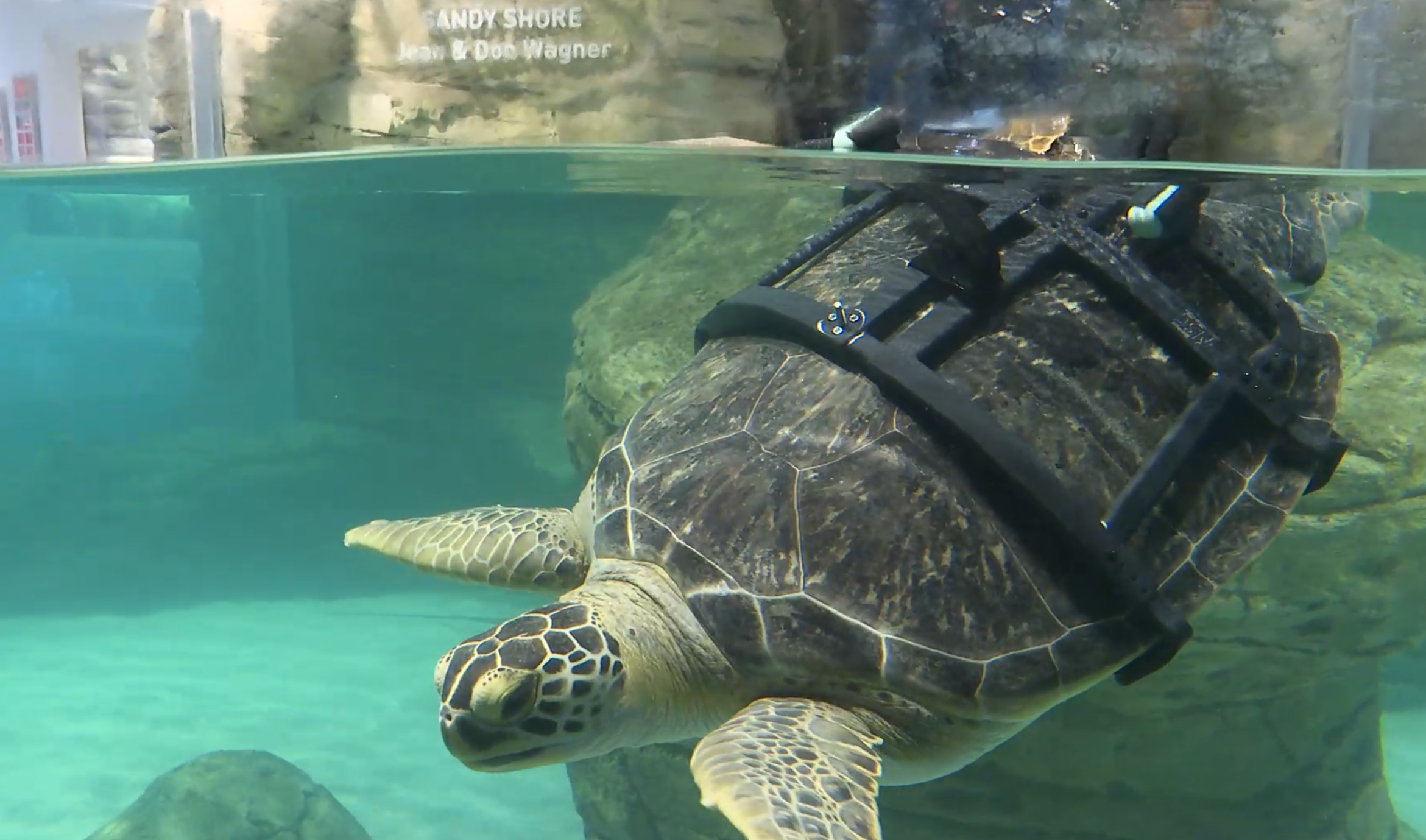
If you visit the Kansas City Zoo, make sure to head to its Aquarium and look for a very special sea turtle named Tortellini. You can’t miss her! She’s the only sea turtle at the zoo who has a specially made harness attached to her shell. This ingenious harness was developed through the curiosity and dedication of a team of engineers and scientists at KCNSC, in partnership with the zoo. 

Tortellini has a condition called Positive Buoyancy Syndrome, more colorfully known as “bubble butt syndrome.” This condition likely stemmed from an injury to her shell and spine caused by a boat propeller strike. Due to her injury, her gastrointestinal tract develops gas bubbles, throwing off her buoyancy. This prevents her from swimming normally and limits her ability to submerge, making it impossible for her to survive in the wild. 

Holly Weber, a KCNSC Principal R&D Scientist, noticed Tortellini during a visit to the zoo and was inspired after reading an NPR article about another sea turtle with bubble butt whose life was improved through a custom-designed weighted harness. As a devoted animal lover and with a daughter who is a zookeeper, Holly was inspired to contact her colleague at KCNSC, Senior Fellow and Chief Scientist Dan Bowen. Along with other KCNSC staff, they conceived an idea to significantly improve Tortellini’s quality of life. 

“At KCNSC, we’re dedicated to solving some of the world’s most complex problems, though we often can’t discuss our work with family and friends,” Dan shared. “When Holly and I spoke, I realized — we can do this. And we get to demonstrate to our loved ones how our skills and talents can contribute to a truly wonderful cause.” 

“Plus, Tortellini is absolutely adorable! How could we not want to help her when we knew KCNSC had the capability?” Holly added with a smile. 

Tortellini arrived at the zoo Aug. 6, 2023, from the Clearwater Marine Aquarium rehab facility. Tamara Arndt, Animal Care Team Lead at the zoo, noted that Tortellini was an immediate fit. “When I saw Tortellini, it was love at first sight,” Tamara recounted. “I’ve cared for and loved many turtles in my career, but none immediately captured my heart quite like Tortellini.” 

While Tortellini has adapted to her buoyancy issues, her condition previously prevented her from living the fulfilling life she deserves. For example, when she needed to sleep, she was forced to wedge herself under a rock ledge to stay submerged. The zoo had previously attempted to address Tortellini’s buoyancy with other weighted harnesses, but she hadn’t adapted to them and would scratch them off. They also tried unsuccessfully to adhere weights directly to her shell. 

Back at KCNSC, Holly reached out to Neiko Levenhagen, Lead R&D Scientist, for his expertise and insights in polymer additive manufacturing (AM). Neiko assembled an AM team, including Senior Mechanical Engineer Peter Roth, to create Tortellini’s custom harness. 

This project involved many intricate technical considerations. Tortellini’s care team wanted the harness to be easily removable without touching her injury site, yet still allow her to scratch the injured part of her shell. Additionally, they needed a harness that wouldn’t snag on her exhibit or other animals, could withstand the harsh saltwater environment and would accommodate her growth. Given that a sea turtle can grow up to 4 feet in diameter, weigh more than 300 pounds, and live for up to 70 years, flexibility in design was paramount. 

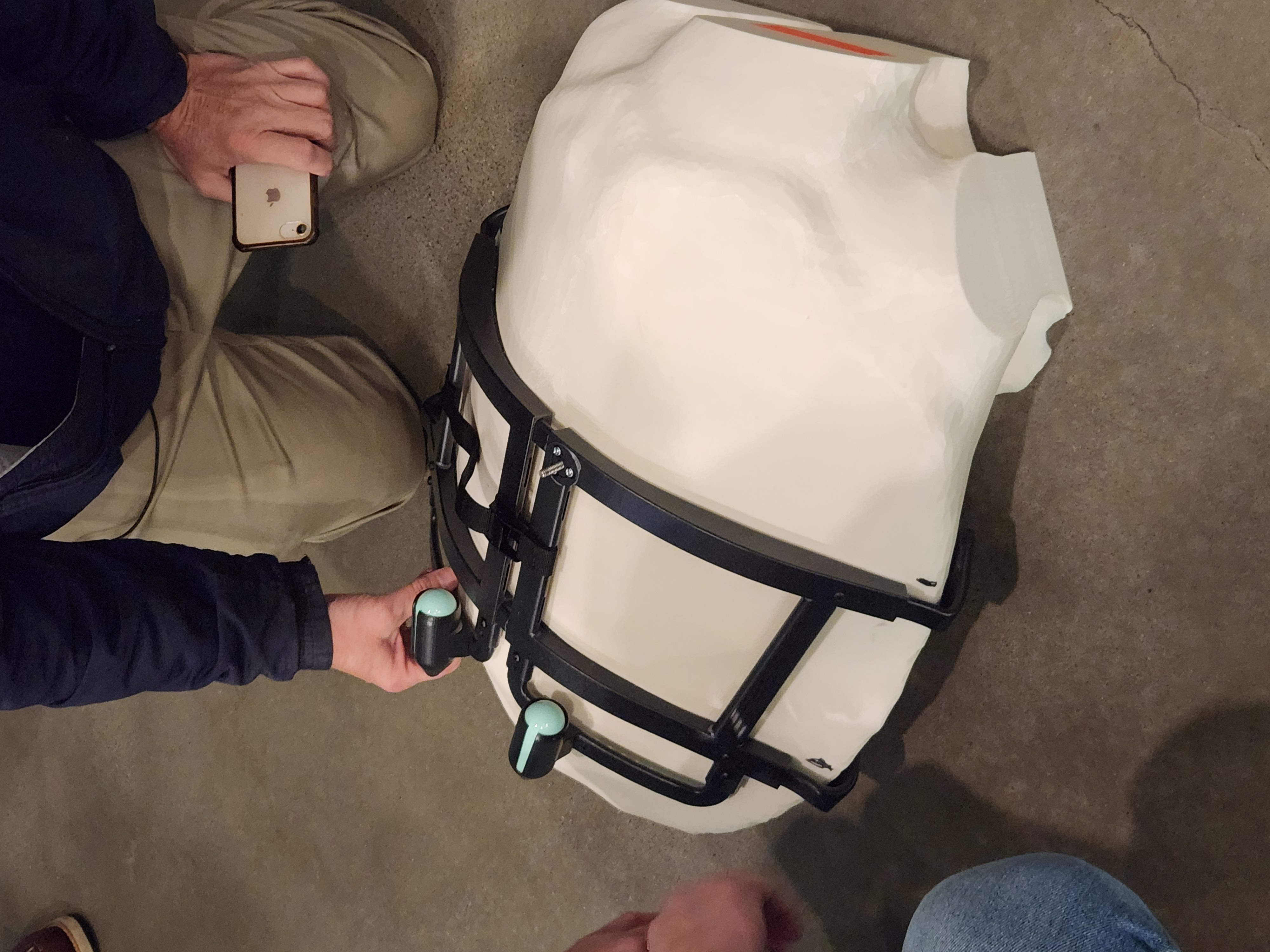
The design team collaborated closely, testing various materials and designs. They even created a 3D-printed model of her shell to test their prototypes. 

“I’d never 3D-scanned a living creature before,” Peter remarked. “We ended up using 3D-scanning software on our phones to avoid applying anything directly to Tortellini, ensuring she experienced no stress during the process.” 

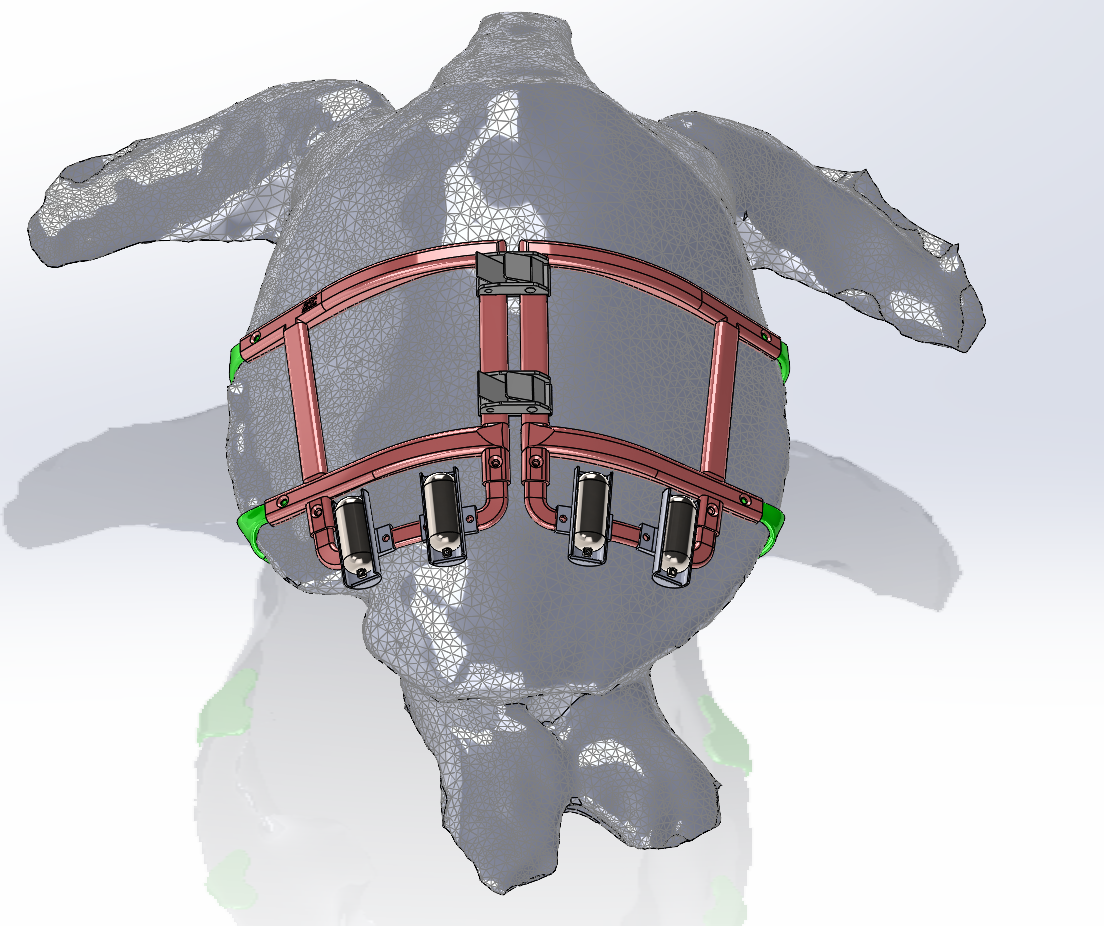
The 3D scan was then imported into a computer-aided design (CAD) program. Peter used the CAD program to input the 3D-printed shell, then digitally created a block harness by digitally subtracting materials until it fit Tortellini’s profile. After numerous brainstorming sessions, the team utilized multi-jet fusion technology, where powder is loaded into a 3D-printing machine, building the harness layer by intricate layer. 

On Dec. 5, 2025, the KCNSC team brought the finished harness to the zoo to test their design and see Tortellini’s reaction to their efforts. 

Neiko was given the honor of personally placing the harness on Tortellini. The zoo staff carefully moved her back into the water, and the team waited with bated breath. “I think all of our hearts were racing,” Neiko recalled. “Tortellini had rejected harnesses and weighted systems before, and we were nervous to see what she thought of her new KCNSC gear.” 

Those initial fears quickly transformed into high-fives and hugs. Tortellini immediately took to her harness. Soon after it was attached, she swam gracefully to the bottom of the tank and to everyone’s amazement, immediately took a nap. When the team inquired about what was happening, the zoo staff explained that this was the first time she had ever been able to swim to the bottom and sleep effortlessly, just like other sea turtles. She was finally able to fully relax. 

The KCNSC team is now working on minor adjustments to ensure the harness functions perfectly long-term and is committed to assisting with future modifications as Tortellini continues to grow. 

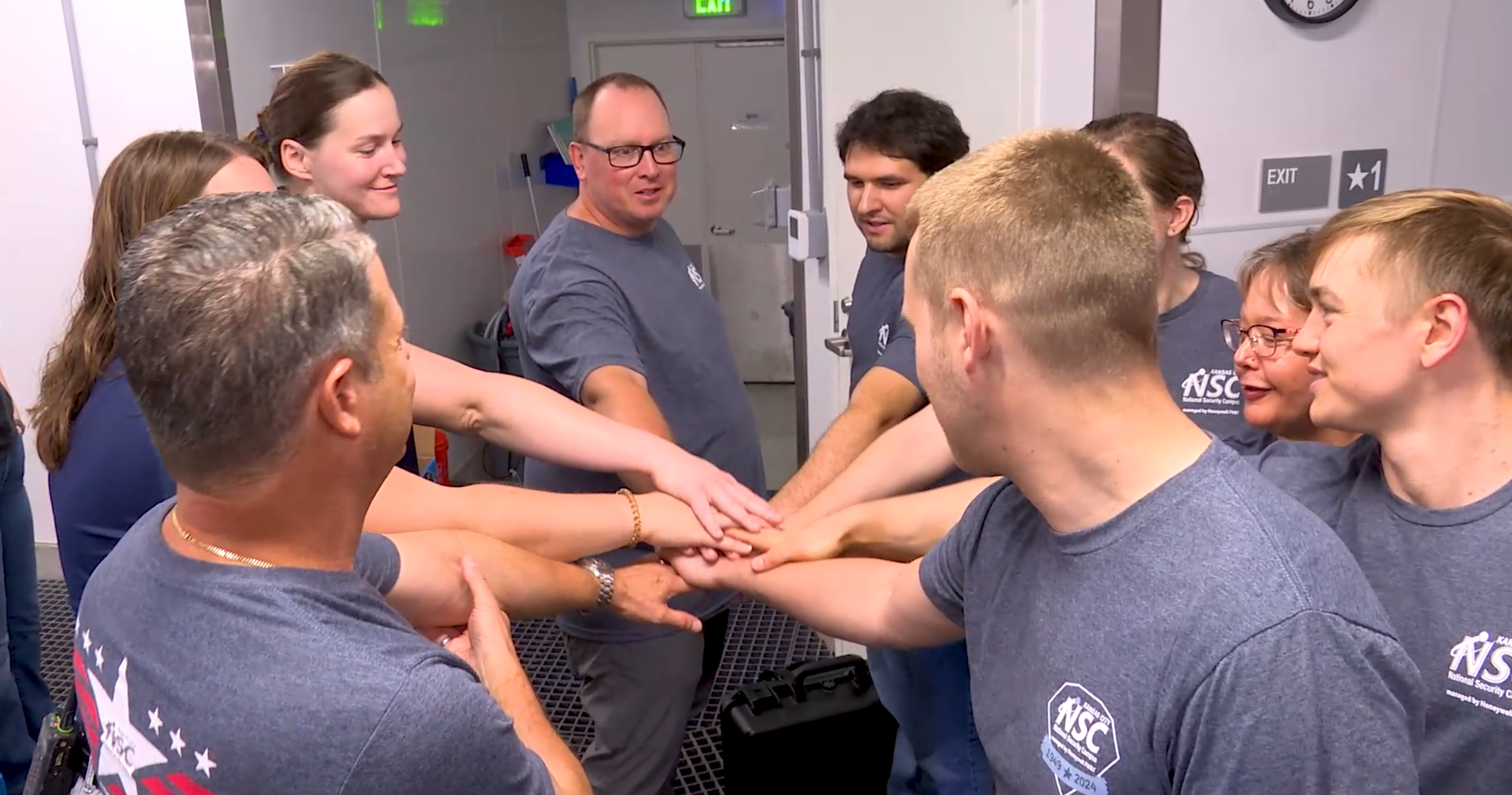
Tortellini has truly captured the hearts of everyone at KCNSC. This remarkable endeavor involved multiple departments, a dedicated team of nine, and more than 15 individuals from various other areas of the business. 

Tortellini’s 3D-printed shell and a prototype of her harness will be gifted to the zoo, allowing docents to teach visitors about the innovative harness and let them see it up close. 

Holly hopes this project will inspire the next generation. “The 3D-printed model will spark a lot of curiosity,” she said. “Our engineering team innovated together to create something that will profoundly improve Tortellini’s life. The hope is that it will also pique interest in STEM careers for the young visitors at the zoo.” 

In the meantime, Tortellini should prepare herself for the many KCNSC employees who will come to visit her, eager to share with the next generation of STEM learners in their own homes: “We did that.” 

Scroll to top